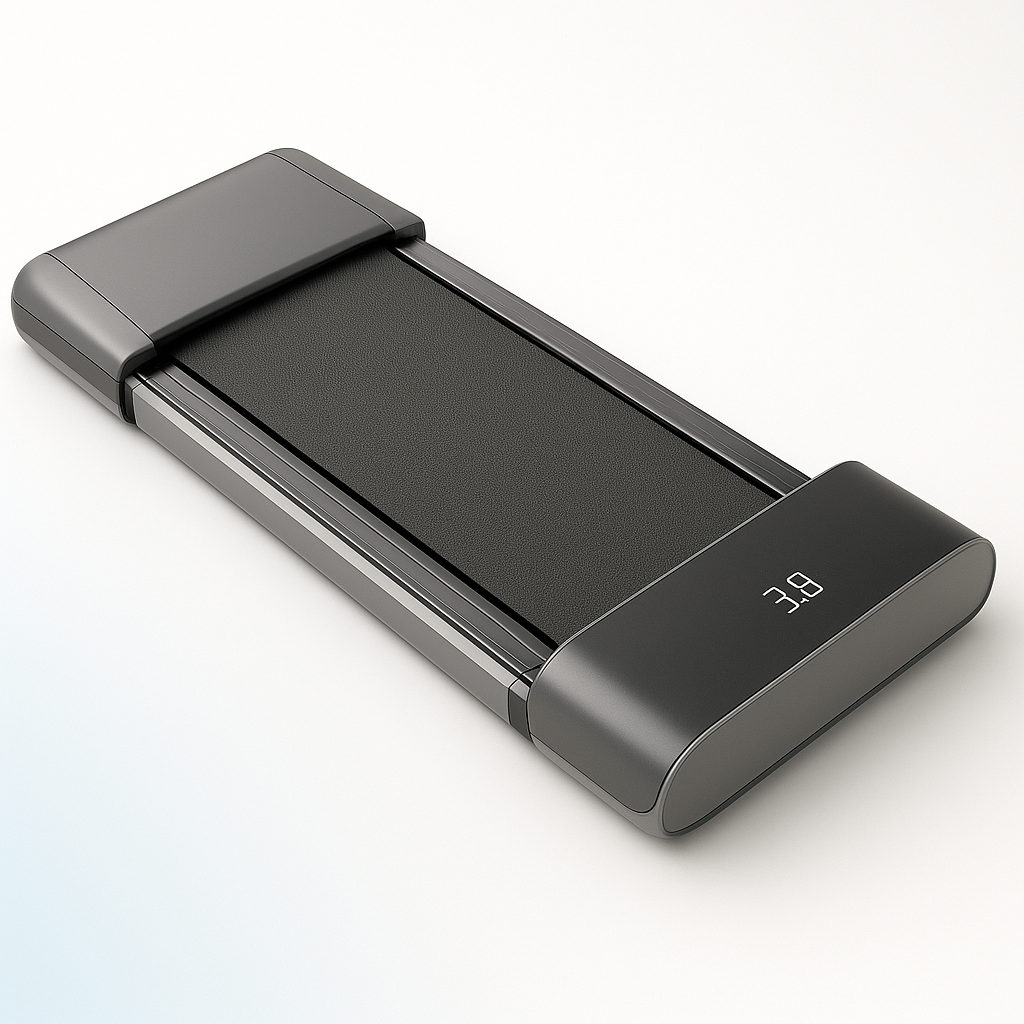
Let’s Play Future-X vs LP-400: these two treadmills offer different reasons to spend more than you would on a basic walking machine. The Future-X review lists a larger running surface and higher user-weight limit. The LP-400 Touchscreen review describes a smaller, foldable machine with a large display and a higher advertised top speed.
Quick verdict: shortlist the Future-X if deck space and a higher stated weight capacity are your priorities and you have a permanent installation area. Shortlist the LP-400 Touchscreen if folding and the screen matter more. Neither is a compact walking pad, and neither is an automatic winner for every home.
This comparison uses published specifications and our individual reviews to assess running space, features, storage and warranty.
Affiliate disclosure: As an Amazon Associate, we earn from qualifying purchases. Purchases through our Amazon links may earn a commission at no additional cost to you.
1. Let’s Play Future-X vs LP-400: compare the exact models
We are comparing the LP-FUTURE-X from our Future-X review with the LP-400 Touchscreen version. Let’s Play also lists other LP-400 and Future models. Match the model and console before ordering; a similar name does not establish identical equipment.
| Buying detail | Let’s Play Future-X | Let’s Play LP-400 Touchscreen |
|---|---|---|
| Motor rating | 4 HP continuous / 8 HP peak AC | 3 HP continuous / 6 HP peak AC; continuous figure from brand page |
| Advertised top speed | 20 km/h | 22 km/h |
| Running surface in our reviews | 160 × 58 cm | 135 × 52 cm |
| Maximum user weight in our reviews | 220 kg | 180 kg |
| Listed overall dimensions (L × W × H) | 200 × 90 × 158 cm | 174 × 86 × 138 cm |
| Listed machine weight | 200 kg | 107 kg |
| Storage | Folding not established in our source review | Hydraulic folding described by the brand; folded size needs confirmation |
| Auto incline | 20 levels in our review; percentage also quoted but not independently confirmed | Our review says 15 levels; brand copy mixes percentage and grade figures—confirm actual range |
| Console | Digital console; exact panel technology unverified | 15.6-inch touchscreen with Bluetooth audio |
| Programmes | 12 in our review | Our review says 16 preset; brand says 12 preset plus 4 manual |
| Warranty recorded in our reviews | 1 year treadmill; 10 years motor and frame | 1 year treadmill; 5 years motor and frame |
| Full individual review | Read the full article | Read the full article |
| Latest Amazon price | Check the latest price on Amazon | Check the latest price on Amazon |
Dimensions, weights and warranty periods above are carried over from our individual reviews. Ask for the current model sheet and written warranty before purchase. Confirm the exact model and seller terms on the current listing.
2. Running space: the Future-X has the larger listed deck
The reviewed Future-X deck is 25 cm longer and 6 cm wider than the LP-400 deck. On those figures, its rectangular running area is about 32% larger: 9,280 cm² versus 7,020 cm². The calculation compares listed deck area; stride comfort also depends on your height and pace.
Extra length and width may matter if your stride feels restricted on a shorter treadmill. Try the machine at your normal pace where possible. The LP-400’s higher headline speed does not cancel out its shorter listed belt: assess the space you actually need before prioritising a maximum-speed number.
Both models advertise cushioning. Compare deck feel at your usual pace where possible; belt-layer counts alone do not rank comfort or noise.
3. Motor, speed and incline: look beyond peak horsepower
The Future-X is described as 4 HP continuous and 8 HP peak AC. The LP-400 brand page describes 3 HP continuous and 6 HP peak AC. Continuous and peak figures represent different ratings, so compare like with like. These advertised numbers do not establish real-world reliability or how either machine performs under your particular load.
The LP-400 has the higher advertised maximum speed—22 km/h versus 20 km/h. That difference is useful only if your training calls for it and the deck suits your stride. For many walking and jogging routines, the controls, usable belt area and service support will be more relevant than the final 2 km/h.
Incline needs clarification. Our Future-X review uses both “20 levels” and a percentage range. The LP-400 review says 15 levels, while the brand page contains inconsistent percentage and grade wording. Levels are not automatically percentages. We therefore cannot reliably rank the maximum incline from these descriptions; request the manual or a written specification.
4. Floor space and folding: LP-400 is the smaller option on paper
The listed unfolded footprints work out to roughly 1.80 m² for the Future-X and 1.50 m² for the LP-400. Those figures describe the machine footprint only, not the safe operating space. Allow the clearances specified in the supplied manual, particularly behind the belt.
The LP-400’s folding mechanism may help free some floor space between sessions. However, our sources do not establish its folded dimensions, and a listed 107 kg machine is still substantial. The Future-X review lists 200 kg and does not establish a folding mechanism. Plan a permanent position unless the seller confirms otherwise.
Before paying, measure doorways, lift access and the installation route. Ask whether delivery includes carrying the machine upstairs, assembly and a demonstration. A machine that fits the room may still be difficult to bring into it.
5. Console and workouts: decide what you will actually use
The LP-400’s clearest convenience advantage is its advertised 15.6-inch touchscreen and Bluetooth audio. Check the exact screen, app support and software terms on the unit being supplied. Bluetooth speaker support alone does not establish fitness-app or heart-rate-sensor compatibility.
The Future-X review mentions USB, AUX and wireless phone charging, but its description does not reliably establish the display technology. Confirm these extras rather than choosing on an “AMOLED-style” description.
Programme counts also need context. The LP-400 brand description separates 12 preset modes from 4 manual modes, while our individual review calls all 16 preset programmes. The Future-X review lists 12. Think about whether you prefer a built-in routine or simply adjusting speed and incline yourself.
6. Capacity, warranty and total cost
The reviewed user-weight limits are 220 kg for Future-X and 180 kg for LP-400. Treat these as advertised limits, not promises about suitability at every speed or session length. Ask the seller to confirm the permitted load and duty cycle for your intended walking or running use.
The Future-X review records longer motor and frame warranty periods. A longer headline warranty is useful only alongside clear coverage: ask about labour, electronics, belts, travel charges, maintenance requirements and whether home and commercial use have different terms. Confirm service availability at your PIN code.
Use the Amazon buttons in the table to compare the exact variants, then add delivery, installation and any required accessories to the checkout cost. Do not choose purely on the discount percentage.
7. Which Let’s Play treadmill should you shortlist?
- Future-X: the more relevant shortlist if the larger listed deck and higher stated capacity address your needs, and you can accommodate its size and weight.
- LP-400 Touchscreen: the more relevant shortlist if you want the screen, folding design and smaller listed footprint, provided its belt dimensions suit you.
- Neither: worth considering if your main need is occasional walking, easy relocation or storage in a very small room. Compare simpler machines before paying for features you will rarely use.
Our preference is conditional: prioritise the Future-X’s deck if running space is your main constraint; prioritise the LP-400’s storage and console features if those solve a practical home-use problem. We do not have enough evidence to name a winner for durability, noise or after-sales service.
Frequently asked questions
Is the Future-X faster than the LP-400?
No. Our source reviews list 20 km/h for Future-X and 22 km/h for LP-400. The Future-X has the larger stated deck and motor ratings, which are separate characteristics.
Does 20-level incline mean 20% incline?
Not necessarily. A level is a setting; a percentage describes gradient. Confirm the model’s actual gradient from its manual.
Which is easier to store?
The LP-400 has documented folding and a smaller listed unfolded footprint. Check its folded measurements and moving procedure before deciding that it fits your storage space.
Which has lower electricity consumption?
We cannot tell from the available information. The LP-400 review’s 240 W entry is not a verified operating-consumption measurement. Motor horsepower and maximum speed alone cannot determine your electricity bill.
Read the individual reviews
Read the full article Read the full article
About this comparison
Prepared on 10 October 2026 using our Let’s Play Future-X review and Let’s Play LP-400 review, plus the manufacturer’s LP-400 Touchscreen listing. Calculations use the dimensions recorded in our reviews. This buying guide focuses on running space, features, storage and warranty; listing differences are noted beside the relevant specifications.