
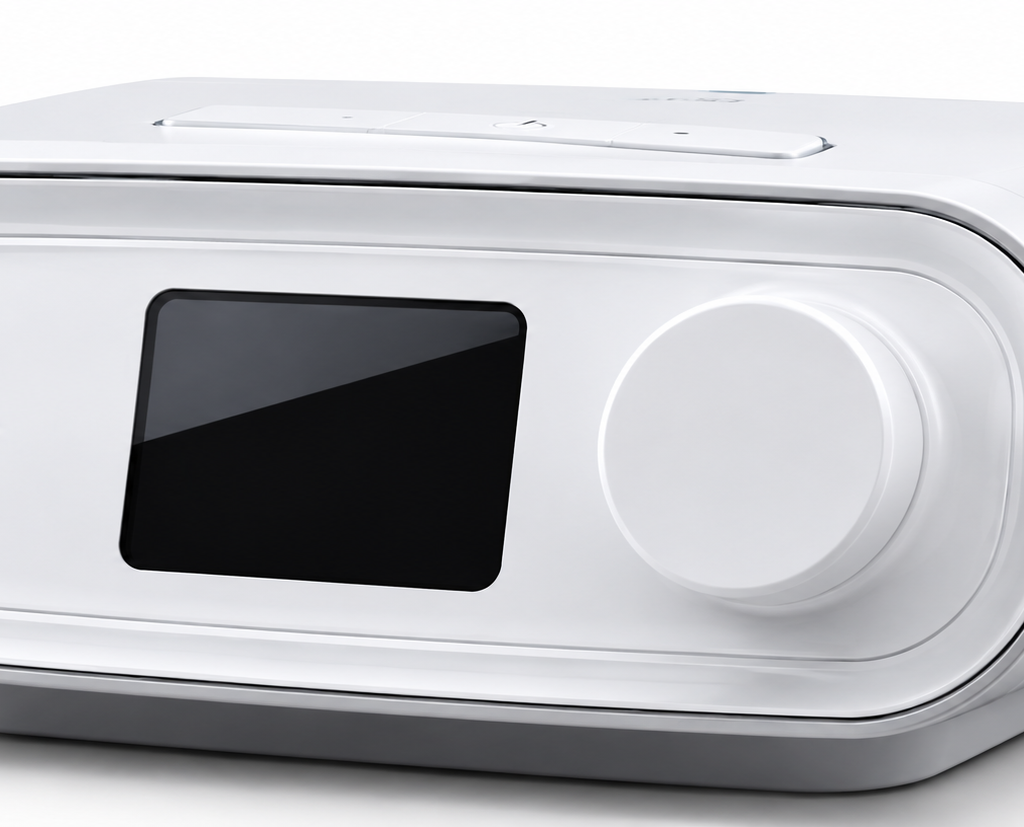
This DreamStation Auto CPAP review examines the bundle advertised with a medium Amara full-face mask, reduced-size frame and headgear, plus online demonstration and installation. It is a medical therapy purchase: the exact machine, mask fit and supplier support matter more than a long feature list.
As an Amazon Associate, we earn from qualifying purchases.
Important before ordering: Philips lists DreamStation CPAP and Auto CPAP devices among the families covered by its 2021 field safety notice concerning sound-abatement foam. The supplied listing does not establish this unit’s serial-number status or remediation history. Verify both directly with Philips and obtain supporting documentation before purchase. Philips India states these therapy devices require a prescription and consultation with a sleep therapy physician. Read the Philips safety notice.
Quick verdict
Consider this bundle only after confirming the exact device identity, safety status and suitability with your sleep specialist. The advertised combination brings together an auto-adjusting machine, full-face mask and setup support. However, those conveniences do not resolve the most important unanswered question: which specific machine will the seller supply, and what documentation accompanies it?
Our buying assessment is to prioritise traceability and clinical support. If the supplier cannot provide a clear device label, serial number and written answers about its condition and applicable safety actions, choose a supplier that can.
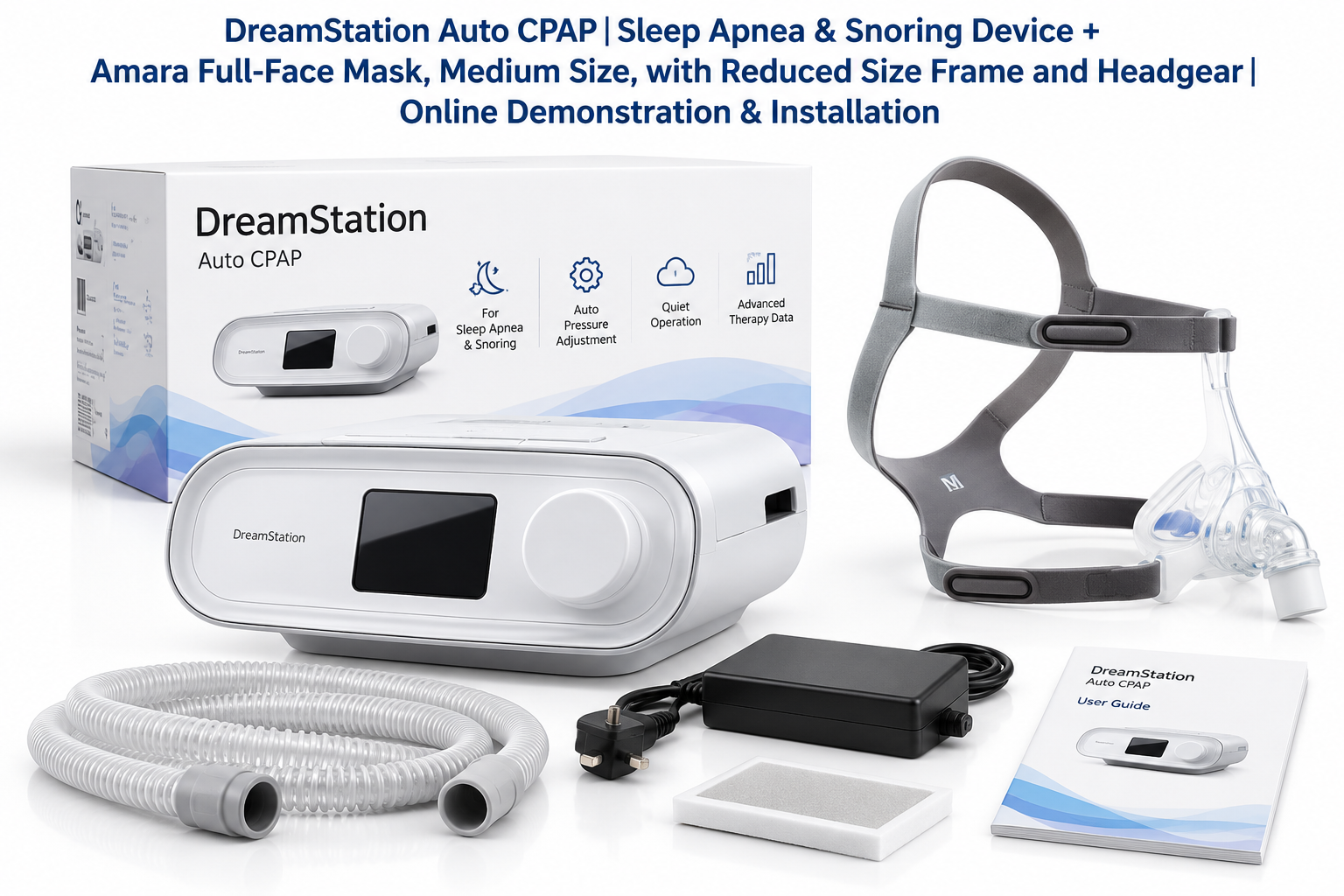
DreamStation Auto CPAP review: what the listing includes
| Item | Advertised details and buying checks |
|---|---|
| Machine | DreamStation Auto CPAP; confirm the manufacturer model code and serial number on the unit |
| Mask | Amara full-face mask, medium, with reduced-size frame and headgear |
| Pressure adjustment | Automatic pressure adjustment advertised; clinical settings must follow the prescription |
| Interface and comfort | Display, ramp technology and Bluetooth advertised |
| Setup service | Online demonstration and installation advertised; confirm what the service covers |
| Listing identity | ASIN B0GYJ5D88H; seller/brand field shows medaxo, manufacturer field names Respironics |
| Accessories to confirm | Tubing, filters, power supply, humidifier, travel bag and any data accessories |
| Essential documentation | Prescription, invoice, warranty terms, device condition and applicable recall/remediation records |
The seller’s catalogue reference “180012_180033” is not enough to establish the machine’s manufacturer model. Likewise, the listed 600 g weight and 15 × 19 × 8 cm dimensions should be checked against the actual device documentation before using them to plan travel or bedside space.
1. Confirm the DreamStation generation and safety status first
Do not infer that an older device is unaffected because the Amazon listing first appeared in 2025. A listing date is different from the machine’s manufacturing date. Ask for photographs of the actual unit’s identification label and confirm the result with Philips, rather than relying on a generic “new stock” statement.
If remediation is claimed, request the relevant service records and verify them through the manufacturer. The name DreamStation alone does not distinguish every version in the range. Keep the serial number and invoice together for future servicing.
People already using an affected device should discuss the next step promptly with their treating clinician. The FDA recommends an individual benefit-risk decision about continuing, stopping or changing therapy; stopping can itself carry risks for some patients. See the FDA’s patient recommendations.
2. Automatic pressure does not remove the need for a prescription
Auto CPAP adjusts pressure within a prescribed treatment plan. It is not a reason to select your own pressure range or buy the machine solely because someone snores. Philips distinguishes fixed-pressure CPAP, auto-adjusting therapy and bilevel therapy; these are different options, not interchangeable labels.
Bring the exact proposed model to your sleep specialist before ordering. Online installation should help implement the agreed plan, rather than replace the assessment that establishes which therapy is appropriate.
3. Medium is a mask size, not a guaranteed fit
The bundle specifies the traditional Amara full-face mask. Do not confuse it with the differently designed Amara View. Philips offers Amara cushion options, so confirm the precise cushion supplied as well as its size and part number.
A bundled medium mask is convenient only if it fits you. Ask whether fitting support and an exchange arrangement are available before opening the package. Get a clear answer about how the supplier handles a poor fit, rather than treating headgear adjustment as a universal solution.
4. Check what Bluetooth and ramp support actually provide
The DreamStation family includes Bluetooth connectivity and comfort tools. Philips describes DreamMapper as a way to review therapy usage, mask-fit information and the device-reported apnea-hypopnea index. Confirm current app availability and compatibility for the exact unit before making connectivity a deciding factor.
Philips also describes SmartRamp within the range. Ask the supplier to identify the features present on the supplied model and demonstrate their prescribed use. Do not assume that every DreamStation variant includes every feature mentioned in family-level marketing.
5. Get a complete accessories list
The illustration shows several components, but an illustration is not a packing list. Ask the seller to itemise everything included in the invoice or written quotation. A humidifier and heated tubing should be confirmed separately; their presence elsewhere in a product range does not establish inclusion in this bundle.
Replacement supplies also deserve attention. Before choosing the seller, check whether it can provide the appropriate filters, tubing, mask cushions and headgear, with clear part references. This makes later orders less dependent on matching a product photograph.
6. Define the online setup service before paying
A useful demonstration should cover assembly, the prescribed setup, mask fitting, routine care and how to contact the supplier if problems arise. Ask who conducts it, how an appointment is arranged and whether follow-up help is included.
Keep a written record of the service commitment. “Online installation” is too broad to tell you whether the supplier will help with a fit problem a week later or only show how to connect the tubing on delivery day.
7. Compare the supplier, not just the offer
Request the warranty provider, service location, return conditions and whether the machine is new, refurbished or remediated. These descriptions should be explicit. A supplier that answers precisely is easier to assess than one offering broad promises about comfort or silence.
The supplied listing advertises quiet operation but provides no verified noise figure. Avoid choosing on that phrase alone. For the live offer and seller terms, use the link below after completing the clinical and device-status checks.
Frequently asked questions
Is this an oxygen concentrator?
No. It is listed as an Auto CPAP therapy machine. Do not purchase it as a substitute for prescribed oxygen equipment.
Does the bundle definitely include a humidifier?
The supplied title does not establish that. Obtain an itemised accessories list from the seller.
Can a product page prove the unit is unaffected by the recall?
No. Verify the actual unit’s identity and applicable status directly with Philips, including any claimed remediation documentation.
Final buying assessment
The bundle is worth evaluating for its combination of machine, mask and support, but device traceability and clinical suitability must lead the decision. Proceed only when the model, safety records, mask fit and after-sales arrangements are clear. A lower offer cannot compensate for unanswered questions about the equipment you will use overnight.
Manufacturer references: Philips India sleep therapy and prescription information; DreamStation family features; Amara full-face mask.