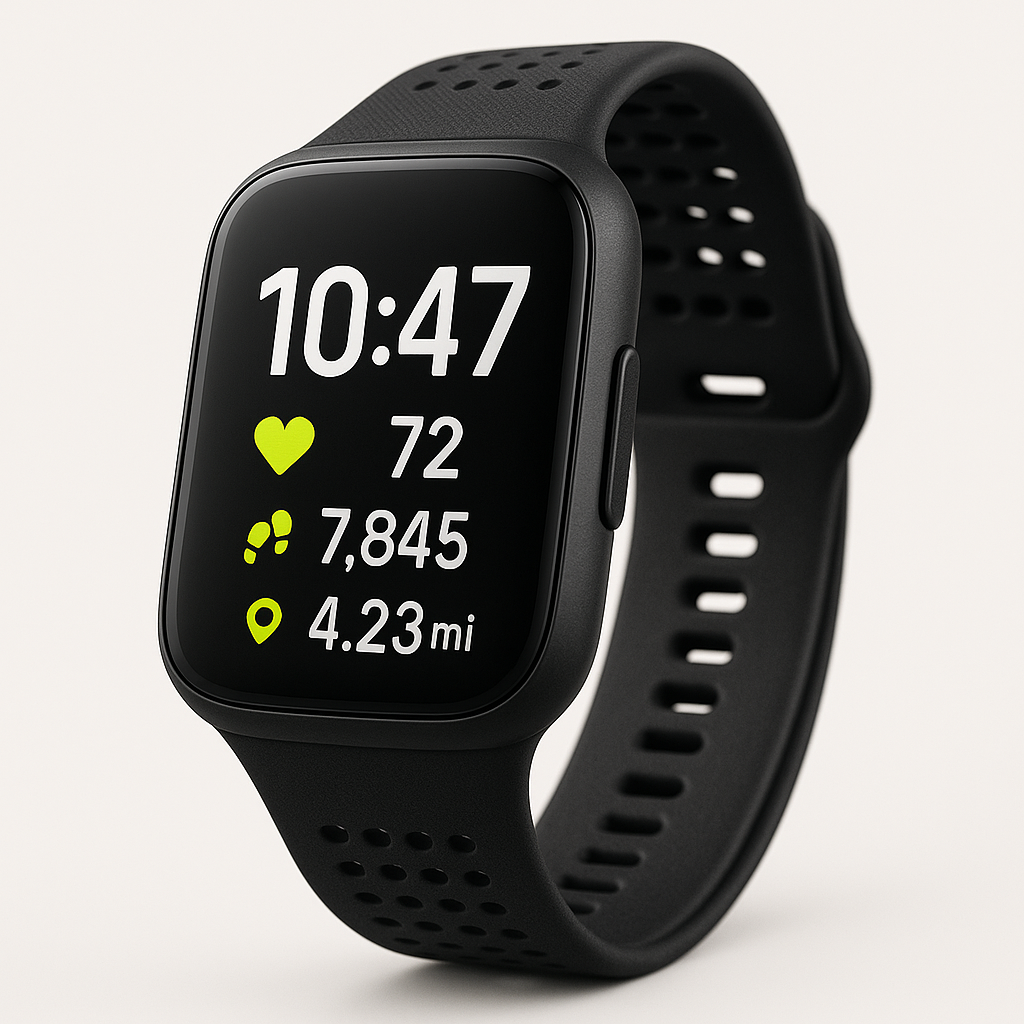
Polar H10 vs wrist heart rate is a decision about how to record workout heart rate, not simply which product has more features. H10 is a chest-worn sensor. Forerunner 265 and Vantage V3 are complete GPS sports watches. You may need a watch, a strap or both, depending on the equipment you already own and the information you want.
As an Amazon Associate, we earn from qualifying purchases.
Quick verdict: replace the sensor role, not the whole watch
Choose a sports watch first if you need GPS, a workout display and an everyday activity record. Consider adding H10 if you want a chest-based heart-rate source and have a compatible receiver or recording workflow. A strap can complement a watch; buying one does not automatically remove the need for the other.
Polar H10 vs wrist heart rate: practical comparison table
| Buying detail | Polar H10 chest strap | Garmin Forerunner 265 | Polar Vantage V3 |
|---|---|---|---|
| What you are buying | Heart-rate sensor and chest strap | GPS sports watch | GPS multisport watch |
| Continuous workout HR method | Electrical activity sensed at the chest | Optical sensing at the wrist | Optical sensing at the wrist |
| On-device display | No | AMOLED | AMOLED |
| Built-in GPS | No | Yes | Yes |
| Daily activity and sleep role | Session sensor; not an all-day watch replacement | Watch-based activity and sleep tools | Watch-based activity and sleep tools |
| Connection emphasis | Bluetooth, ANT+ and GymLink; verify receiver support | Pairs with compatible external sensors | Pairs with compatible Bluetooth heart-rate sensors |
| Battery approach | Replaceable CR2025 coin cell | Rechargeable watch | Rechargeable watch |
| Best reason to shortlist | Add a chest-based workout signal to a compatible setup | On-wrist recording, GPS and running tools | Polar training, recovery and maps |
| Can these work together? | Can send heart rate to a compatible watch or app | Can use a compatible chest strap during training | Can use a compatible chest strap during training |
| Individual review | Read the Full Review | Read the Full Review | Read the Full Review |
| Current Amazon offer | Check Price on Amazon | Check Price on Amazon | Check Price on Amazon |
1. The two sensing methods have different trade-offs
A wrist optical sensor uses light to detect changes associated with blood flow. H10 senses electrical activity through chest-strap electrodes. Polar describes these as different measurement methods, with fit and wearing conditions important to both.
This distinction gives you a better starting point than a universal “strap always wins” claim. Vigorous wrist movement, a loose watch or flexing around the wrist can affect optical readings. A poorly fitted or dry chest strap can also produce unreliable records. Equipment choice should include how you will wear and maintain it.
2. Choose the recording workflow before ordering
H10 does not provide an on-device workout screen or its own GPS route. Decide where you want to see the heart-rate information and where the session will be saved. That could be a compatible watch, a supported app or an appropriate memory-recording workflow.
Forerunner 265 and Vantage V3 give you a watch display and GPS recording in their own right. Adding H10 changes the heart-rate source used for a workout; it does not turn the strap into a running watch. This is why comparing only the purchase prices would miss the practical difference.
3. Existing watch owners have a different decision
If you already own a compatible sports watch, ask what problem you want the strap to solve. Perhaps a particular exercise repeatedly produces a confusing wrist trace, or you want to use one sensor with compatible gym equipment. A specific requirement makes an accessory easier to evaluate.
If you are starting from no equipment, first decide whether you need a screen, route recording and all-day tracking. A complete sports watch may cover more of those needs. It is often clearer to plan the whole system than to buy the lowest-cost component and discover what is missing later.
4. Pair through the training device’s sensor settings
Confirm that the watch or app supports the connection method you intend to use. Bluetooth and ANT+ are protocols, not a guarantee that every receiver supports every feature. Pairing should follow the receiver’s instructions so the external signal is actually used for the recorded workout.
Before an important session, check the connection and verify that a sensible live heart-rate value appears. H10 can support two Bluetooth connections when the appropriate setting is enabled, but that does not mean every app will manage multiple connections automatically. Set up the specific combination you will use.
5. Comfort and care are part of the comparison
A watch is convenient because you may already be wearing it. A chest strap adds another item to carry, fit and clean. The reviewed H10 offer includes an M–XXL strap; confirm the fit range against your own measurement rather than assuming one strap suits everyone.
Follow Polar’s guidance to moisten the electrode area before use and care for the textile strap afterwards. The replaceable coin-cell approach differs from charging a watch, but it does not remove maintenance. A strap you avoid wearing cannot improve the usefulness of your workout record.
6. H10 does not replace all-day watch features
A chest-based workout signal is a different function from daily activity history, sleep tracking, on-wrist guidance or maps. Compare those requirements separately. Forerunner 265 is relevant for a Garmin-based running routine; Vantage V3 is relevant for Polar’s training and navigation approach.
Do not buy H10 expecting the same functions as a wrist ECG application or a medical diagnostic test. Its role in this article is exercise heart-rate recording. Symptoms or concerns about heart rhythm need appropriate clinical assessment, not an equipment upgrade based on a comparison table.
Which setup fits your situation?
- Existing compatible watch, specific workout-HR requirement: consider H10 as an accessory after checking fit and pairing.
- No watch, need GPS and pace on the wrist: start with Forerunner 265 or Vantage V3, then decide whether a strap adds enough value.
- Mainly steps, sleep and everyday awareness: prioritise the daily wearable experience before buying a session-specific strap.
- Phone or gym-equipment recording: verify the receiver, supported protocol and session-saving workflow before ordering H10.
Frequently asked questions
Can H10 be used with a watch?
Yes, with a compatible sensor connection. Check the exact watch’s instructions and pair it as an external heart-rate sensor.
Does H10 measure GPS pace or show a route?
No. Route and pace information require a suitable recording device or phone workflow.
Does a chest strap guarantee a perfect trace?
No. Electrode contact, fit, battery condition and connection all matter. Follow the setup and troubleshooting instructions.
Should I compare a strap’s battery hours with a watch’s smartwatch days?
No. They describe different devices and workloads. Compare maintenance and charging needs within the setup you intend to use.
Final recommendation
For a complete training interface, buy the watch that fits your sport and app preference. Add H10 when a chest-based heart-rate signal solves a specific need. The strongest setup can be a watch and strap together, with each doing the job it was designed for.
Manufacturer details: Polar explanation of optical and chest sensing; H10 technical specifications; H10 wearing and signal troubleshooting; Forerunner 265 specifications; Vantage V3 specifications.